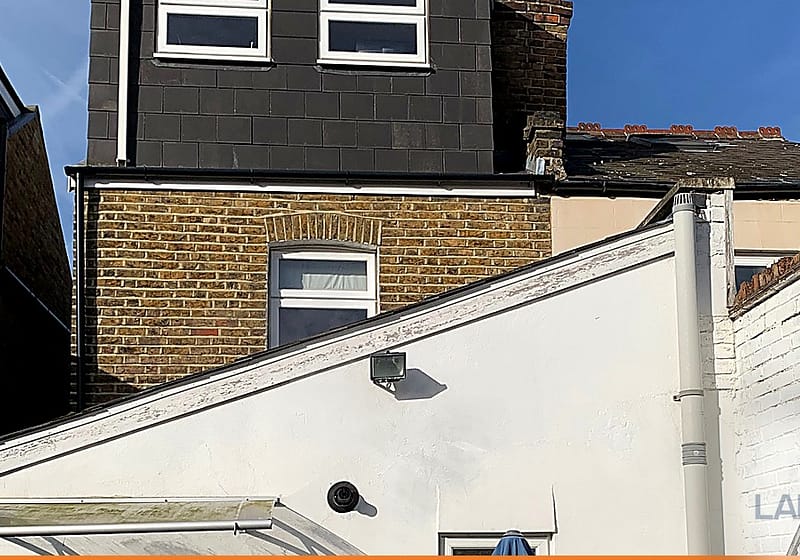
Your Survey Recommended a Structural Engineer. What Happens Now?

You have had an offer accepted, paid for a survey, and the report has come back with a sentence along the lines of “we recommend that a structural engineer be instructed to investigate further.” It is a deflating thing to read, and the natural reaction is to assume the worst. In practice, instructing a structural engineer after a house survey is usually the step that ends the uncertainty rather than the one that confirms it.
Most of these referrals resolve into something manageable. A few do not. The point of the exercise is to find out which one you are dealing with, before you either pull out of a house you would have been happy in or commit to one with a problem nobody has priced.
Why surveyors refer rather than conclude
This catches people out, because it reads as evasion. It is not.
A building surveyor is appointed to inspect and report on condition across the whole property, visually, without opening anything up. A structural engineer is appointed to work out why something is happening and what, if anything, needs doing about it. Those are different jobs with different professional indemnity behind them.
So when a surveyor sees cracking that could be thermal movement or could be subsidence, the correct thing for them to do is say so and refer it on. They are not hedging. They are declining to guess, which is what you would want from them.
It is also worth knowing that a mortgage valuation is a different thing again. A valuer is checking the lender’s security, not your interests, and a retention or a condition on the offer frequently arrives through that route rather than from your own survey.
The usual reasons it happens
- Cracking. By far the most common trigger. The surveyor can see it but cannot tell from a single visit whether it is historic and settled or active and progressive.
- Signs of previous structural work. A beam where a wall used to be, a chimney breast removed downstairs, an opening formed between two rooms — often with no paperwork to say it was designed.
- Bulging, leaning or bowed walls. Particularly on older solid-wall property, where the two faces of the wall may have separated over decades.
- Floors that slope or feel springy. Usually a joist question rather than a foundation one, but it needs establishing which.
- Trees close to the building on clay. A standing concern across Peterborough and much of the East of England, where shrinkable clay and mature trees sit side by side.
- Roof spread. Where a roof has gradually pushed the tops of the walls outward, which is common on older houses and frequently stable.
What actually happens next
An engineer’s inspection is a different exercise from the survey you have already paid for. It is narrower and it goes deeper.
We start with the thing that was flagged and work backwards from it. For cracking that means the pattern, the width, the direction, whether it passes through the masonry or around it, and whether the same movement shows up inside and out. The aim is to establish a cause rather than describe a symptom.
Then we look for the things that commonly explain it and are easily missed on a general inspection — a leaking drain near a corner that is dropping, a tree in the right place to matter, an opening formed without a lintel adequate for the span, cement pointing on a solid wall that should never have had it.
Most of the time that is enough to reach a conclusion in a single visit. Occasionally it is not, and the honest answer is that the building needs watching. Crack monitoring over several months tells you whether movement is live or finished, and it is a far better basis for a decision than anyone’s opinion on a single dry afternoon.
What the report gives you
A structural engineer’s report should do three things: say what is happening, say why, and say what it would take to put right. The third part is what makes it useful in a negotiation.
“There is cracking to the rear elevation” changes nothing. “The cracking is historic, consistent with settlement that occurred decades ago, and no remedial work is required” lets you proceed with confidence. “This is active movement associated with the drain run on the north side, and the repair involves X” gives you a number to take back to the seller.
All three are good outcomes. The one to avoid is not knowing.
Does it affect the mortgage?
It can, and this is where timing matters.
Lenders are generally comfortable with a clear structural report. What makes them nervous is an unanswered question. If a valuer has flagged something, the lender will usually want a specialist report before releasing funds, and occasionally a retention until work is done.
Insurance is the related issue people forget. A property with a history of subsidence can be harder to insure, though it is rarely impossible, and a report establishing that movement is historic and stable is exactly the evidence an insurer will ask for.
Is it worth it if you might walk away?
Usually, yes, and the maths is fairly blunt.
An engineer’s inspection costs a small fraction of a percent of what you are about to spend on the house. Against that, it either removes a reason to hesitate, or it gives you a costed problem to negotiate with, or it tells you to walk away from something you would have regretted.
The expensive version is proceeding on an assumption. We are called to plenty of houses where the structural question was waved through at purchase and surfaced two years later with nobody left to share the cost.
Frequently asked questions
How quickly can an inspection be arranged?
Usually within a few days. We know a referral like this normally arrives mid-chain with a deadline attached, and we work to that.
Will the seller let an engineer in?
Nearly always. A seller who has had a sale stall over a structural question generally wants it answered as much as you do, because the same question will come up with the next buyer.
Is a structural engineer’s report the same as a Level 3 survey?
No. A RICS Level 3 survey assesses the condition of the whole property. A structural engineer’s report investigates one specific structural question in depth and gives an opinion on cause and remedy.
What if the report finds something serious?
Then you know, with a figure attached, before you are committed. That is a considerably better position than finding out afterwards, and it is a legitimate basis for renegotiating.
Can you look at photographs first?
Often, yes. A few clear photographs of the cracking and its surroundings are frequently enough for us to say whether a visit is warranted, and we will tell you if we think it is not.
Had a survey come back with a structural recommendation?
If a surveyor has referred something on, the useful next step is to get a straight answer rather than sit with the uncertainty while the chain moves around you. Instructing a structural engineer after a house survey typically takes one visit and a report, and in most cases it ends with a property you can buy in confidence.
We are a chartered structural engineering practice with offices in Peterborough and London, covering the East of England, Hertfordshire and Greater London, fully insured to £5 million professional indemnity.
Send us the relevant extract from your survey and a few photographs, and we will tell you honestly what it looks like and how quickly we can get there.
Have a question about your own project?
Send us a drawing or a photo and an engineer will tell you what is possible.
Book a consultation